Claude Code Review
A source-backed review of Claude Code's terminal-first agent workflow, permissions, sandboxing, pricing paths and fit for individual developers and engineering teams.
What We Like
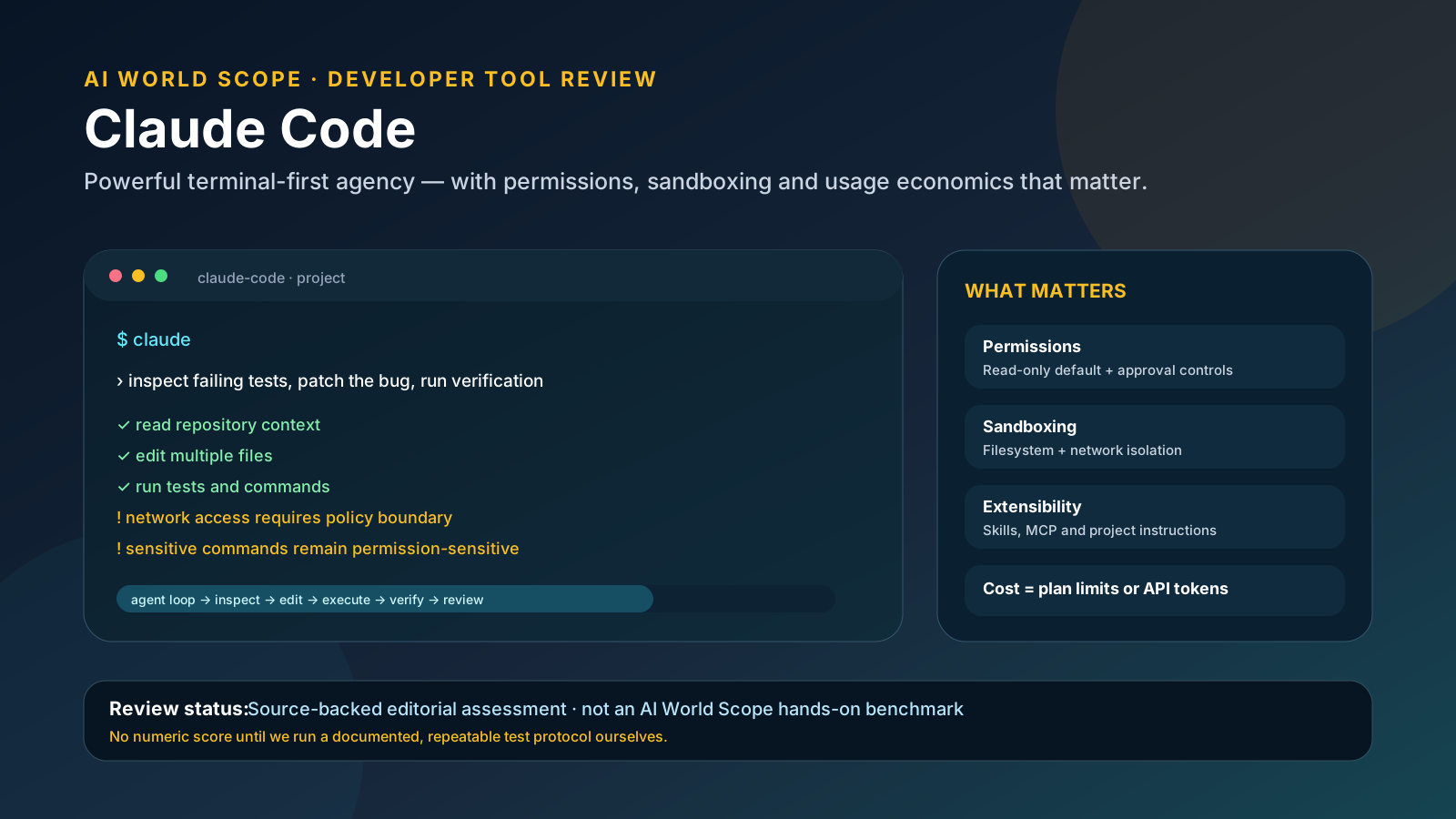
- •Terminal-first agent can inspect code, edit multiple files, run commands and verify changes in the developer's real repository environment
- •Permission-based default model plus configurable filesystem and network sandboxing reduces the need to choose between constant approvals and unrestricted execution
- •Supports project-level reusable instructions and custom Skills, with the Claude API skill bundled for current Anthropic API guidance
- •Available through individual subscriptions, Team and Enterprise plans, or pay-as-you-go API-key workflows
- •Team and Enterprise commercial data is not used for model training by default unless the organization explicitly joins Anthropic's Development Partner Program
- •Usage and model choice can be inspected from the CLI, including session cost when using API-key billing
Trade-offs
- •Giving an agent shell, filesystem and network access creates real prompt-injection and supply-chain risk even with permission controls
- •Heavy users can hit plan usage limits or incur variable token spend when using API-key billing
- •Sandboxing and network allowlists improve safety but add configuration overhead for repositories that depend on many external services
- •Consumer-plan privacy and retention terms differ from commercial Team, Enterprise and API arrangements, so organizations must verify the exact authentication path
- •Enterprise pricing combines seat access and usage charges on current plans, making total cost less predictable than a flat developer-tool subscription
Best For
Developers and engineering teams that want an agent to work directly in a real terminal/repository workflow and are willing to pair that autonomy with explicit permissions, sandboxing and human code review.
Alternatives to Consider
- • Cursor
- • OpenAI Codex
- • GitHub Copilot
Testing Methodology
Source-backed editorial assessment using current Anthropic product, security, pricing, usage and privacy documentation checked on September 21, 2026. AI World Scope did not run a controlled hands-on coding benchmark for this review, so no numeric score or performance winner is published.
Editorial Review & Verdict
Claude Code is a strong fit for developers who want an agent to operate inside the same repository and terminal environment where they actually build software, rather than limiting AI assistance to autocomplete or chat. Its permission model and sandboxing are meaningful strengths because agentic coding is most useful when the tool can run commands and change files — exactly the access that also creates security risk. For individuals, the $20 Pro entry point is straightforward, while Max plans target heavier use. Teams get Claude Code in every Team seat, with Premium seats for higher limits. Current Enterprise economics are more complex because seat access and token usage are billed separately. The key buying question is therefore not whether Claude Code can edit code — it can — but whether your team has the review discipline, sandbox policy and usage monitoring to let a local coding agent act safely and economically. This is a source-backed editorial assessment, not an AI World Scope hands-on benchmark, so we do not assign a numeric score.
Pricing & Tier Details
Individual: Pro $20/month or $200/year; Max 5x $100/month; Max 20x $200/month. Team: Standard $25/user/month monthly or $20 annually; Premium $125/user/month monthly or $100 annually. Current Enterprise plans use a per-seat access fee plus usage billed at standard API rates. API-key Claude Code usage is pay-as-you-go.
Sources & Verification
Official documentation checked for this source-backed review.
- documentationUse Claude Code with Pro or MaxVisit Source
- documentationUse Claude Code with Team or EnterpriseVisit Source
- documentationClaude plans and individual pricingVisit Source
- documentationClaude Team plan pricingVisit Source
- documentationClaude Enterprise billingVisit Source
- documentationClaude Code models, usage and limitsVisit Source
- documentationClaude Code user FAQVisit Source
- officialClaude Code sandboxingVisit Source
- documentationCommercial data processor termsVisit Source
- documentationAgent Skills overviewVisit Source