OpenAI Brings GPT-6 and Intelligent UI to ChatGPT’s Free and Paid Plans
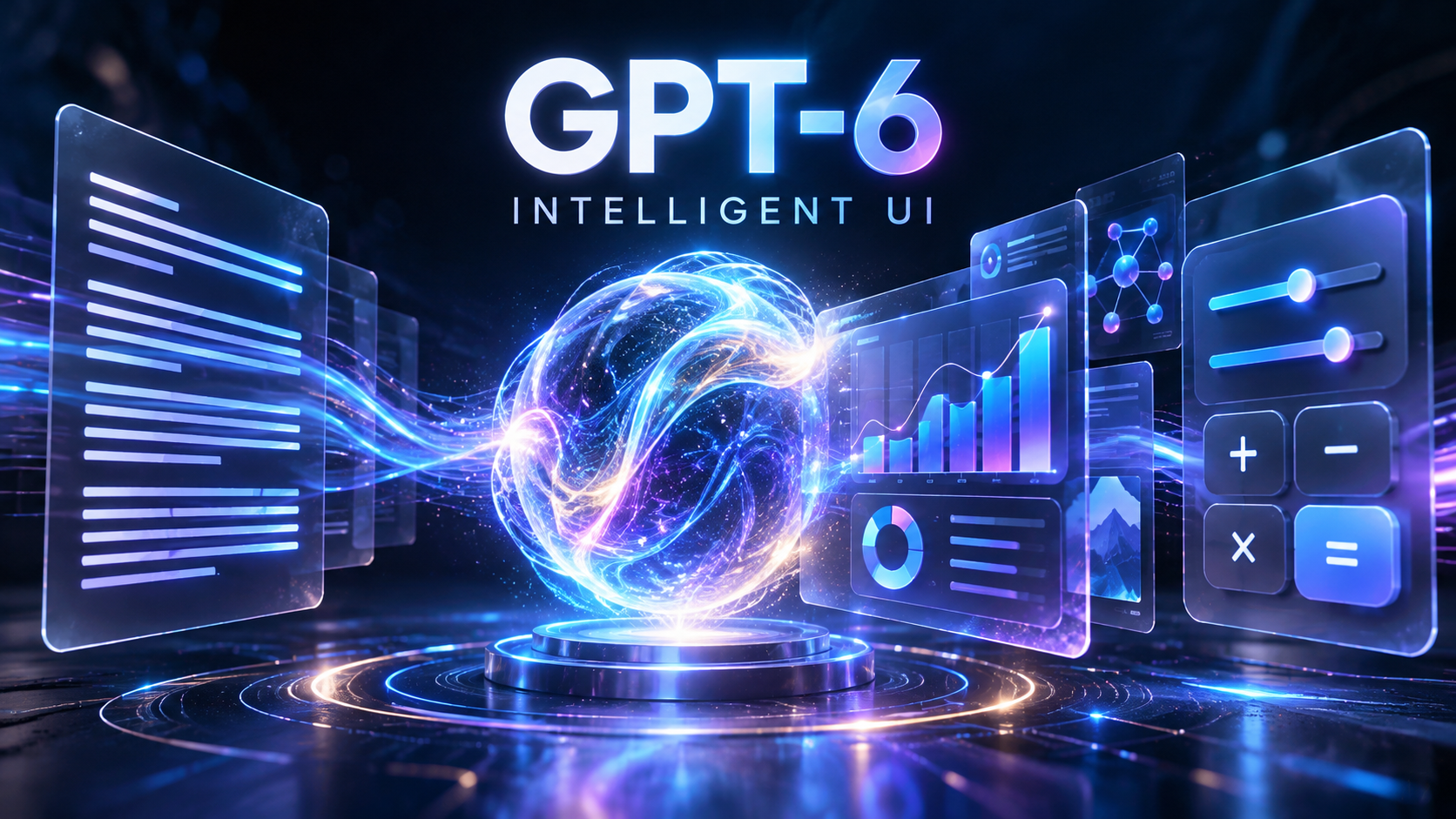
OpenAI is rolling out GPT-6 and a new interactive answer experience in ChatGPT, moving beyond text-only responses.
Quick Take
- OpenAI has described a phased GPT-6 and Intelligent UI rollout in ChatGPT beginning October 7, 2026.
- The reported rollout extends to Free and Go on October 8, following paid-plan availability.
- Intelligent UI aims to present interactive charts, forms, diagrams and compact tools alongside written answers.
- The change concerns the ChatGPT conversation experience; it should not be interpreted as an automatic update to every OpenAI product or API.
- Editorial verification: Recheck the official rollout notice and the live AI World Scope registry before publishing.
From answers to interactive experiences
The significant product shift is not simply a new model label. ChatGPT's Intelligent UI moves selected responses beyond paragraphs of text toward interfaces users can manipulate. A chart can communicate a trend, a form can gather parameters, and a small calculator can make assumptions testable without asking the model to regenerate an entire answer.
OpenAI's reported rollout began on October 7 for eligible paid ChatGPT plans, with Free and Go expansion beginning October 8. The rollout is phased, so the presence or absence of a particular interface element may differ by account and task.
Original-value analysis: interface quality becomes part of answer quality
Traditional AI evaluation emphasizes accuracy, reasoning, latency and cost. Interactive responses introduce another dimension: can the user inspect and modify the result without starting over? A correct static explanation may be less useful than a well-designed interactive chart that exposes its assumptions. Conversely, a polished interface can make a wrong calculation look authoritative. Product evaluation should therefore test both underlying reasoning and the behavior of generated controls.
A useful test is to ask the same quantitative question in plain text and in an interactive format, then change a parameter. Does the visual update consistently? Are units and assumptions visible? Can the user trace the answer back to the inputs? Those checks matter more than visual novelty.
Original-value analysis: the trust boundary shifts to controls
When an AI response contains sliders, forms or mini-tools, the output stops being purely something to read. It becomes something to operate. That creates practical questions for users and developers: whether controls faithfully represent the calculation, whether state changes are reversible, whether values are validated, and whether an interface implies more precision than the source data warrants.
For high-stakes decisions, interactive presentation should support scrutiny rather than replace it. A generated chart is not an independent source of evidence, and a generated calculator should still disclose its formula and assumptions.
Who benefits first?
Educational explanations, scenario comparisons, budgeting exercises, data exploration and step-by-step decision aids are natural candidates. Not every question needs a widget: concise prose remains preferable for simple factual requests. The most successful implementation will choose interactivity only when it reduces the user's work.
What to watch
Key questions include rollout coverage by plan and geography, accessibility of controls, export and sharing behavior, consistency on mobile, and whether interactive elements maintain correctness through repeated edits. It is also important to distinguish this ChatGPT experience from separate changes to Work, Codex or the API.
AI World Scope take
If the rollout performs as described, the strategic change is a new expectation for AI products: a good answer may increasingly be a usable interface rather than a block of text. That raises the bar for model evaluation, user experience and reliability simultaneously.
Editorial note: This draft must undergo a final primary-source and duplicate/storyKey check before publication.
Sources & Documentation
Sources used for this article, with source type and publisher shown where available.
- officialGPT-6 and Intelligent UI for everyoneVisit Source
- officialChatGPT release notesVisit Source