Anthropic Launches Cyber Mission With Free OSS Scanner and Critical Infrastructure Defense Program
Anthropic's October 8 Cyber Mission launches free AI vulnerability scans for eligible open-source projects and a defense program with 11 infrastructure partners.
Summary
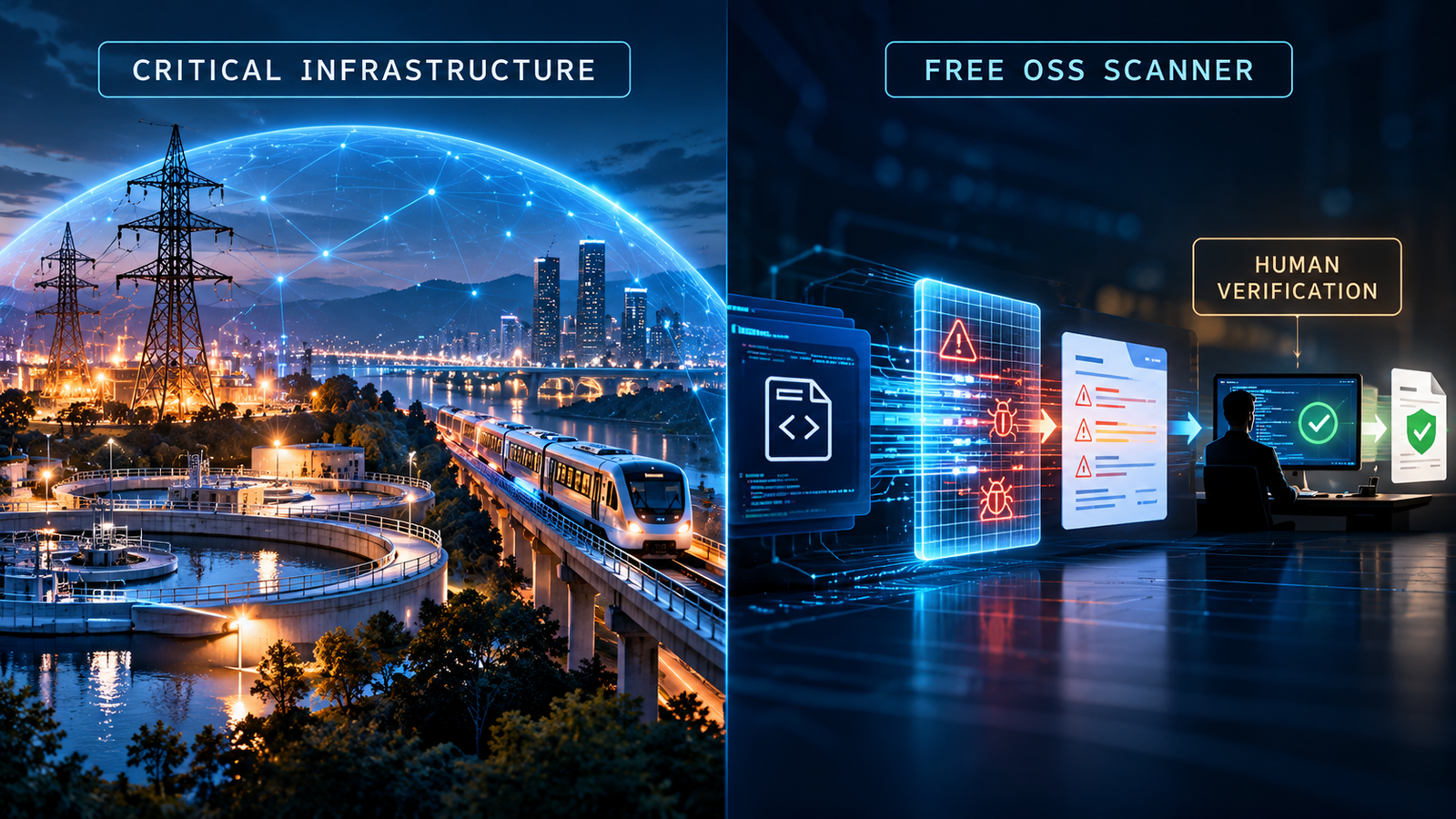
On October 8, 2026, Anthropic launched the Anthropic Cyber Mission, pairing a critical-infrastructure defense program with OSS Scanner, a free, opt-in vulnerability-scanning service for eligible open-source projects. The announcement moves frontier-model cybersecurity beyond research demonstrations and toward recurring support for software maintainers and organizations that protect power, water, transportation, and industrial systems.
The initiative has two distinct delivery paths: security providers receive access to Claude models, threat research, and engineering support through the Critical Infrastructure Defense Program (CIDP); qualifying open-source maintainers can receive periodic model-generated vulnerability reports through OSS Scanner. Both are newly announced programs, not proof that critical infrastructure or open-source software has already become safer.
Quick Take
- Launched October 8: Anthropic announced a Cyber Mission spanning critical infrastructure and open-source security.
- Free OSS Scanner: Eligible projects can opt in for periodic AI-generated vulnerability reports.
- No human pre-review: Scanner findings arrive faster but require maintainer verification.
- Eleven founding partners: CIDP works through established infrastructure security and technology providers.
- Key test: The outcome is verified fixes, not the number of vulnerabilities reported.
What Anthropic actually launched
CIDP starts with 11 founding partners: Accenture, Booz Allen, CrowdStrike, Deloitte, Dragos, Hitachi, Insane Cyber, Nozomi Networks, Palo Alto Networks, PwC, and Rockwell Automation. Anthropic says it is supplying frontier Claude models, engineers, and threat research to providers already responsible for securing operational technology. The program initially works through a limited cohort; it is not a blanket security service available to every utility or factory.
OSS Scanner addresses a different bottleneck. Anthropic says its models identified more than 29,000 candidate vulnerabilities across six months of open-source scanning, while its team manually reviewed or triaged approximately 6,000. Candidate findings are not the same as confirmed vulnerabilities, and neither figure measures successful remediation.
Core maintainers of eligible, established projects can apply through Anthropic's OSS Scanner enrollment repository. Eligibility emphasizes software with substantial infrastructure or user-security impact. After acceptance, maintainers receive periodic reports with an explanation, a reproducible example, and a proposed patch when available. The reports are generated by models, including Claude Mythos, without human review before delivery.
Original analysis: the security workflow has changed
The important shift is from a limited, human-triaged disclosure queue toward an optional high-throughput feed for maintainers equipped to validate it.
| Dimension | Existing human-reviewed disclosure | New OSS Scanner fast track |
|---|---|---|
| Entry point | Anthropic's coordinated disclosure process | Eligible project opts in |
| Review before delivery | Human validation | Model-generated, no human review |
| Typical output | Vetted vulnerability disclosure | Reproducer, explanation, candidate fix |
| Principal trade-off | Slower, constrained by expert capacity | Faster, but verification burden moves to maintainers |
| Best fit | Projects without extensive triage capacity | Projects able to investigate a steady flow of reports |
Anthropic reports that, in one early evaluation, 85 of 97 high- or critical-severity findings met its coordinated-disclosure standard. That is an Anthropic-reported test of a selected sample, not an independently established accuracy rate for all future scans. The company separately says it expects a true-positive rate above 90%; readers should treat that as an expectation rather than a guaranteed service level.
Original analysis: who should adopt it—and who should wait
Strong candidates are mature, widely depended-on open-source projects with a reproducible build environment, a security contact, and maintainers who can reproduce and prioritize findings. Their immediate benefit may be a shorter time from discovery to actionable report.
Projects that should be cautious include small volunteer teams already overwhelmed by security submissions. More alerts can make security worse operationally if they displace patch review, incident response, or release testing. Anthropic says these projects can continue receiving human-verified disclosures through its existing process.
For infrastructure operators, the decision is different. A plausible patch is not automatically safe to deploy on a water-treatment controller or industrial network. Changes need vendor coordination, operational testing, and rollback plans. CIDP's use of established providers reflects that constraint, but real-world reductions in incidents remain to be demonstrated.
What maintainers should check before enrolling
- Confirm the project meets Anthropic's eligibility criteria and has a core maintainer authorized to enroll it.
- Prepare the required project configuration and an offline-capable build environment.
- Assign someone to reproduce reports, distinguish duplicates, and verify severity.
- Track confirmed fixes and time to remediation, not raw AI finding counts.
- Review the program's disclosure and opt-out terms before accepting unreviewed reports.
What to watch next
The next meaningful evidence will be independently verified fixes, published case studies, and sustained maintainer feedback. For CIDP, look for evidence that partners can safely remediate weaknesses in operational technology without causing service interruptions. For OSS Scanner, watch acceptance capacity, false-positive rates across a broader project mix, and whether free access remains sustainable.
AI World Scope take
This is NEW, not merely an update to Anthropic's earlier Project Glasswing work. The launch adds a standing free service for eligible maintainers and a named infrastructure-defense partner program. Its significance lies in distributing powerful vulnerability-finding capability to defenders. Its limitation is equally clear: finding more bugs is not the same as fixing them. The industry should judge this initiative by remediation outcomes, not model-generated report volume.
Sources & Documentation
Sources used for this article, with source type and publisher shown where available.
- officialIntroducing the Anthropic Cyber MissionVisit Source
- officialLaunching an opt-in vulnerability-finding service for open-source softwareVisit Source
- documentationOSS Scanner — FAQ and enrollmentVisit Source
- newsAnthropic launches free AI security scans for open-source projectsVisit Source
- newsAnthropic launches critical infrastructure program and free OSS Scanner for open sourceVisit Source